
Spain / Story
Madrid-Sevilla line to reopen with fewer trains after Urda crash
Óscar Puente says service could resume within an estimated 10 days of judicial approval, with fewer train frequencies until signalling upgrades and a safety review are complete.
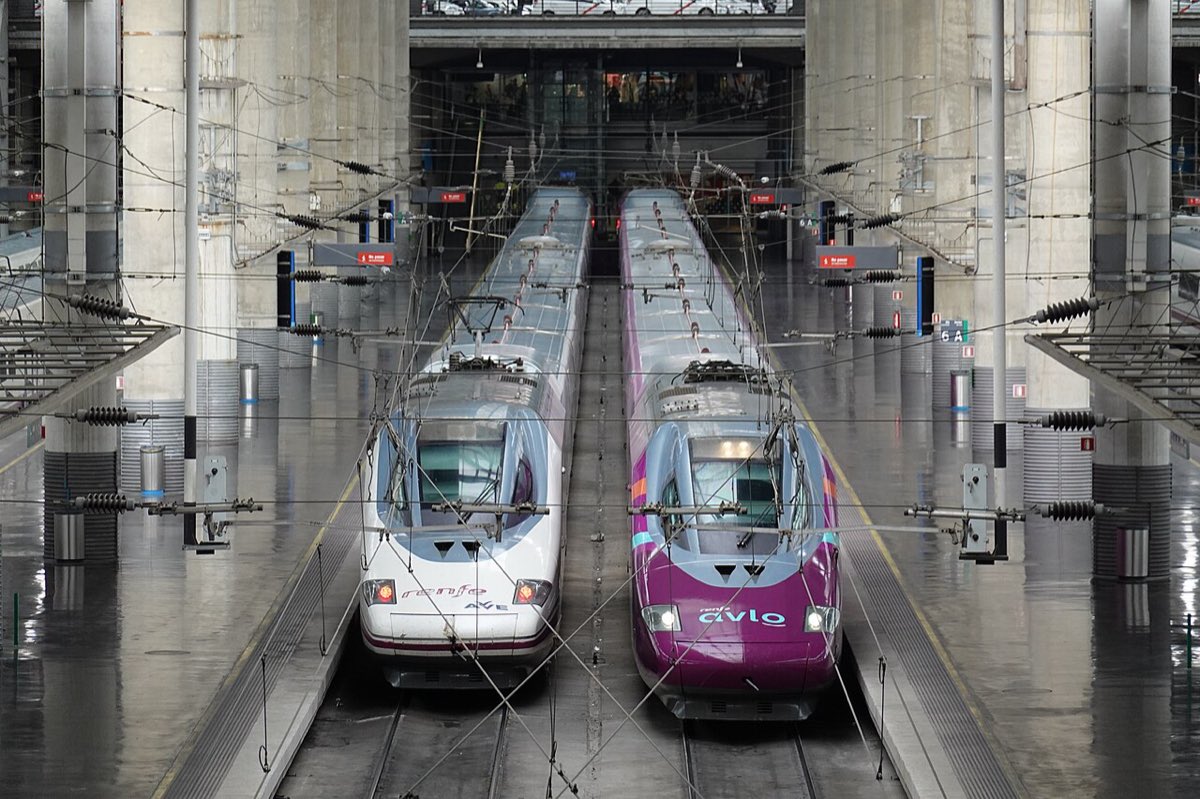
Transport Minister Óscar Puente said on Tuesday 3 November that Madrid-Sevilla high-speed services could resume within a maximum estimated 10 calendar days after the judge authorises reconstruction work at Urda, where the collision damaged the line. He said the route would reopen with fewer train frequencies until the ERTMS-2 rollout and an extraordinary safety review are complete; the reduction concerns how often trains run, not the number of seats offered.
The ministry asked the competent judge on Tuesday for permission to begin reconstruction and replacement work, Puente said, after the crashed trains had been removed from the tracks. He put the damaged stretch at a little over 40 metres, while saying work would cover about 400 metres as a precaution. The 10-day estimate starts only once judicial authorisation is granted, so it is not a confirmed reopening date. Puente said the line’s ERTMS deployment is complex; LZB remains in use while the newer European system is unfinished.
The collision between Renfe and Iryo trains near Urda, in Toledo province, on 28 October killed at least 69 people and injured more than 200, according to ABC. Puente said all the carriages involved had been removed by the time of his announcement. The frequency reduction will apply to Madrid-Sevilla and will not extend to other lines, he said.
The State Railway Safety Agency is to carry out an immediate extraordinary review of the line’s safety systems. Puente also outlined a proposed operating safeguard: when LZB or ERTMS fails, a second human controller would validate critical decisions alongside the first. He said this would add a second sign-off without doubling the number of staff. Other measures he described include new control-centre software, digitised telephone systems and logbooks, stronger staffing and revised rest rules. A tool combining a digital model of the network with artificial intelligence is also planned to monitor operational conversations between controllers and drivers.
Puente said a technical study would examine passive-safety options inside carriages, including closed luggage spaces. Seat belts are ruled out for now because two reports advised against them, he said.
The Council of Ministers has approved a €30 million aid package for people affected by the Urda crash, Puente said. He put assistance at €72,121 for each death and between €2,400 and €84,141 for injuries. The payments are non-refundable, exempt from income tax and compatible with other benefits. The package includes advance civil-liability payments and treats affected people’s sick leave as a work accident from the first day, following the model used after the Adamuz crash.
The Cabinet has also approved a decree-law allowing alternative transport fares and services to be restricted during emergencies to prevent abusive price rises. Puente said alternative transport prices had multiplied by eight or nine and that a similar measure had previously been rejected by Congress, with votes against from the PP, Junts and Vox.
Sources: Europa Press, El Español, ABC, elDiario.es and Diario de Cádiz.
Open reading during our launch. No account or payment required.
ARTICLE SOURCES
Sources and corrections
- Europa Press (opens in a new tab)
- Andalucía Información (opens in a new tab)
- ABC (opens in a new tab)
- El Español (opens in a new tab)
- elDiario.es (opens in a new tab)
- Diario de Cádiz (opens in a new tab)
- The Local Spain (opens in a new tab)
- infoLibre (opens in a new tab)
- 20minutos (opens in a new tab)
Spain
DGT evening feed lists 19 road closures
1 min readPhoto: Javier Mediavilla (Javierme) · CC BY 4.0
Spain
Moreno seeks full Madrid-Andalusia rail audit after new faults
3 min readPhoto: Falk2 · CC BY-SA 4.0
Spain
Spain fuel prices: petrol averages €1.702, diesel €1.889
1 min readPhoto: Natalia Corcobado Pinilla · CC BY-SA 4.0