
Spain / Story
Madrid–Seville line may reopen in 10 days with fewer trains
Spain plans longer but less frequent trains after repairs, tighter control-room checks and temporary fare limits, while Andalusia still seeks more air links.
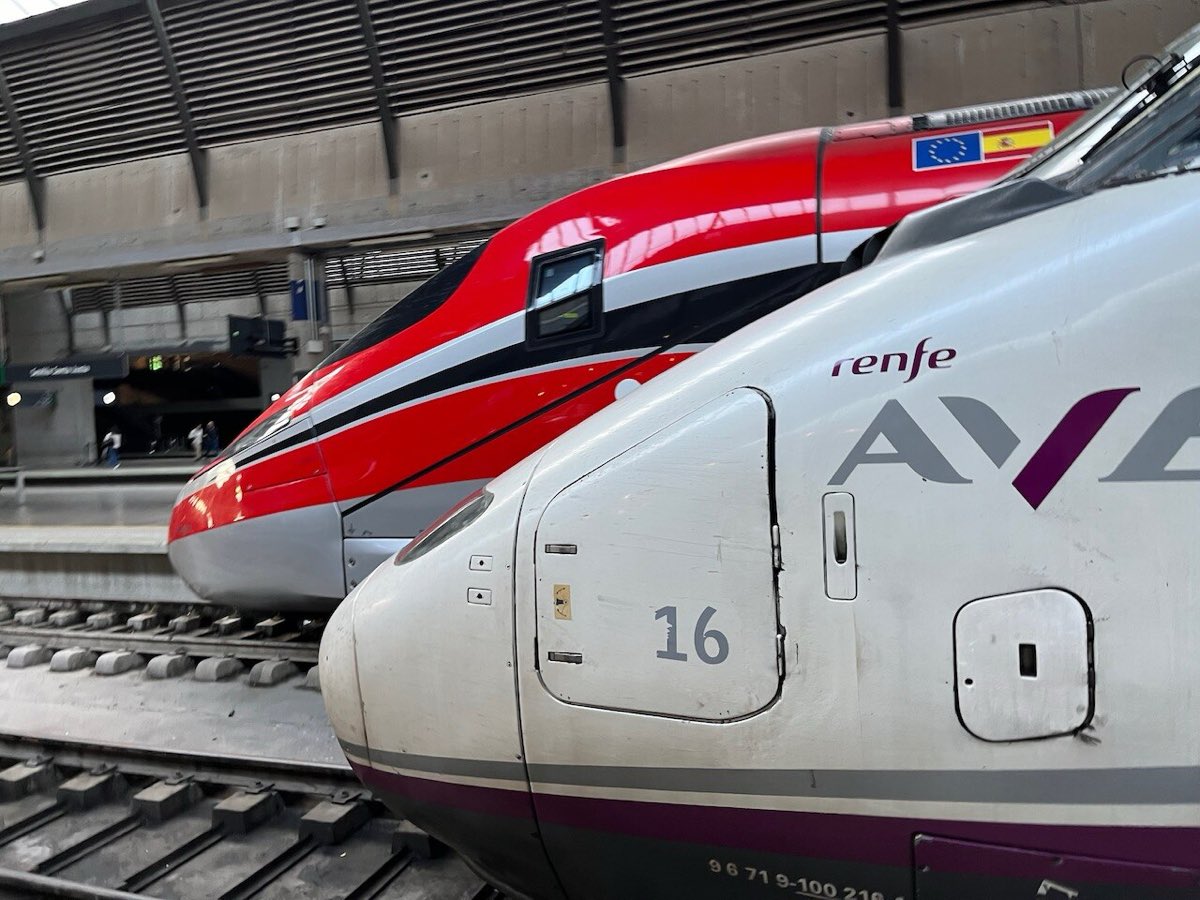
Spain’s Madrid–Seville high-speed line could reopen within 10 days after repair work is cleared, Óscar Puente said on Tuesday. It would return with fewer trains and new safety rules.
Puente resigned as transport minister later that day. The line has been shut since the Urda crash on 28 October, which killed 69 people.
A Renfe AVE and an Iryo train were involved in the collision in Toledo province. Thirty-eight injured people were still in hospital when the new plan was announced.
Repairs and fewer trains
Puente said the wrecked trains had been removed. The ministry had asked the judge in charge for leave to rebuild the damaged track.
The direct damage covers 40 metres, but the work will span 400 metres. Puente gave a cautious maximum of 10 calendar days for the path back to service after work is allowed.
When the line returns, services will run less often until an urgent safety review ends. The lower level will also stay until ERTMS Level 2 starts in early 2027.
Operators may join two train units to keep seat numbers near current levels. Puente said a long train every 15 minutes could carry about as many people as a short one every seven minutes.
Travellers will still have fewer times to choose from. Puente said the service cut would apply only to the Madrid–Seville route.
New checks and fare limits
A second controller must check key orders when automatic block help is down. Puente said current control-room staff would share the extra task.
Renfe has set a 40 km/h cap when its automatic safety system fails. Iryo wants the same rule to apply to every train firm.
The government also plans new alerts, digital records and clear train maps. A one-off safety audit will review the line, while staff will get more training and fatigue checks.
Alternative air and road fares will be limited during the emergency. The cap also covers hotel stays tied to affected trips.
The rule will use prices from before the crash. The ministry has not given one euro cap for all trips or the full formula.
Andalusia keeps air talks open
Andalusia’s government still plans talks with tourism groups and airlines. Tourism councillor Manuel Gavira said the aim was to limit harm while rail links are cut.
The talks will cover flights between Madrid and Seville and Madrid and Málaga. Gavira said Jerez airport could also be part of the offer.
No deal with an airline has been announced. Gavira said British visitors make up about 20% of foreign tourists to Andalusia.
Adif said on 3 November that trains still could not run between Mora y Orgaz and Urda. Services continued on the Madrid–Toledo and Málaga–Seville sections.
Sources: Spain English, Diario de Cádiz, The Olive Press, 20minutos and Canal Sur.
Open reading during our launch. No account or payment required.
ARTICLE SOURCES
Sources and corrections
- 20minutos (opens in a new tab)
- Canal Sur (opens in a new tab)
- Andalucía Información (opens in a new tab)
- Spain English (opens in a new tab)
- Diario de Cádiz (opens in a new tab)
- The Olive Press (opens in a new tab)
- INE (Spain's National Statistics Institute) (opens in a new tab)
Spain
DGT evening feed lists 19 road closures
1 min readPhoto: Javier Mediavilla (Javierme) · CC BY 4.0
Spain
Moreno seeks full Madrid-Andalusia rail audit after new faults
3 min readPhoto: Falk2 · CC BY-SA 4.0
Spain
Spain fuel prices: petrol averages €1.702, diesel €1.889
1 min readPhoto: Natalia Corcobado Pinilla · CC BY-SA 4.0