World / Story
US down to two carriers in Middle East after George Washington leaves
The USS Theodore Roosevelt’s arrival briefly brought the fleet to three carriers. The US blockade of Iranian shipping continues, and Tehran is still barring nuclear inspectors from damaged sites.
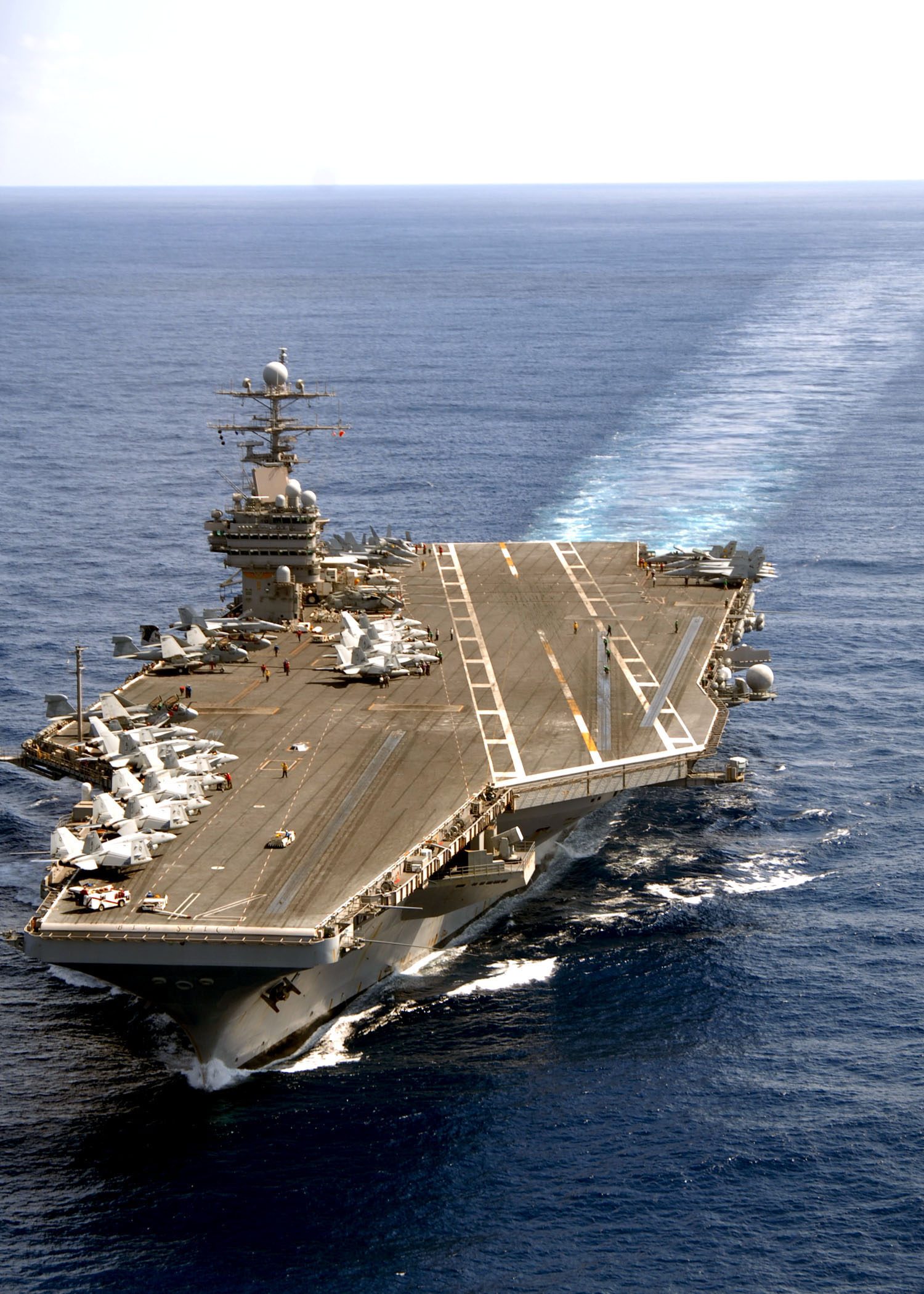
The US Navy confirmed on Wednesday that the USS George Washington had left the Middle East. Two US aircraft carriers remain in the region as the US keeps up its blockade of shipping to and from Iran.
The Japan-based carrier is now back under the Pacific Fleet’s command, said its spokesperson, Cmdr. Katie Koenig. She said it was carrying out routine operations in the Asia-Pacific. The Navy gave no date for its departure from the Middle East.
The USS Theodore Roosevelt arrived on Sunday, a US official told Al Jazeera. Its arrival briefly brought the number of US carriers in the region to three. The USS George H.W. Bush, which has been there since April, is the other carrier still in the Middle East. The George Washington arrived in August.
The war began on 28 February with US and Israeli strikes that killed Iran’s supreme leader, Ayatollah Ali Khamenei. In April, the Navy had three carriers in the region for the first time since 2003. The US still aims to keep Iranian oil off world markets by blocking merchant ships travelling to and from Iran.
Tanker incidents keep pressure on oil prices
Disruption in the Strait of Hormuz has pushed up global energy prices. The strait is a main route for oil and gas exports from the Gulf. Oil prices rose on Monday after reports of fires on tankers.
A British maritime monitor said a tanker was hit by a projectile as it left the strait early on Monday. A fire broke out on board, and the crew escaped injury. On Wednesday, Iran’s navy said three tankers had caught fire after hitting mines. That claim does not establish whether the fires were separate from those reported earlier in the week.
Iran says it could reopen the strait in two days if the US meets seven terms. They include freeing frozen Iranian assets, easing sanctions and ending the US blockade of Iranian ports. Washington has rejected the terms. Pakistan and Qatar have helped mediate, but the broader understanding reached in June fell apart in early July.
US President Donald Trump said last week that another round of major strikes was highly unlikely. He described the war as effectively over in military terms and left open the use of force. US Central Command said on Wednesday that no US personnel had been hurt in attempted Iranian attacks on Gulf bases that week.
Iran keeps inspectors out of damaged sites
Kazem Gharibabadi, Iran’s deputy foreign minister, said UN nuclear inspectors would be kept out of damaged sites until the war ends and Tehran’s terms are met. The International Atomic Energy Agency has pressed for its inspectors to be allowed back.
The agency has had limited access since the 12-day war between Iran and Israel in June 2025, when the US also struck Iranian nuclear sites. Inspectors visited the Bushehr plant in September. They have been unable to return to damaged sites at Natanz, Fordow and Isfahan.
The agency says it cannot verify that Iran’s declared nuclear material has stayed in peaceful use. It has also raised concerns about a plant Iran disclosed in Isfahan that inspectors have never been allowed to visit. Tehran says its nuclear programme is for civilian use.
Open reading during our launch. No account or payment required.
ARTICLE SOURCES
Sources and corrections
- The Times of Israel (opens in a new tab)
- CBS News (opens in a new tab)
- Middle East Eye (opens in a new tab)
- PBS NewsHour (opens in a new tab)
- BBC News (opens in a new tab)
- Al Jazeera English (opens in a new tab)
- Euronews (opens in a new tab)
- PBS NewsHour (opens in a new tab)
- Middle East Eye (opens in a new tab)
- France 24 (opens in a new tab)
- ABC News (opens in a new tab)
- Middle East Eye (opens in a new tab)
- Middle East Eye (opens in a new tab)
- Middle East Eye (opens in a new tab)