World / Story
Kremlin sets terms for Europe’s role in Ukraine peace talks
Moscow wants clarity on Europe’s aims before giving final consent to its role in talks. EU leaders remain split over who should speak for them.
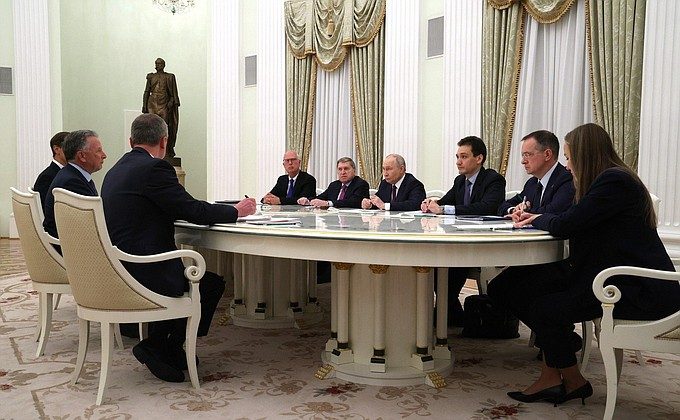
The Kremlin said on Friday that it needed to know Europe’s aims before giving final consent to its role in Ukraine peace talks. EU leaders meeting in Dublin were still debating who should speak for them.
Kremlin spokesman Dmitry Peskov said Moscow had no objection in principle to Europe taking part. A firm decision would depend on its plans and its will to help the peace effort.
He said Europe needed someone with a clear mandate and a real wish to contribute. Direct talks between Moscow and Europe had yet to be discussed, he added. Russia was ready for such contacts.
His remarks qualified the account given by US envoy Jared Kushner in Dublin on 12 November. Kushner said Vladimir Putin had agreed to Europe joining the next talks.
President Volodymyr Zelensky met Kushner and fellow US envoy Steve Witkoff that evening. He said Europe would have a direct voice at the table, as the war was being fought in Europe.
The time and place of the next Ukraine peace meeting remained unclear. Peskov said he expected it soon.
Who speaks for Europe?
European Council president António Costa has the backing of most EU countries, Meduza reported. Supporters point to his time as Portugal’s prime minister and his duty to answer to EU leaders.
Estonia’s prime minister, Kristen Michal, spoke in his favour. Leaders from Luxembourg and Poland also backed him. Italy’s prime minister, Giorgia Meloni, was open to the choice.
Others favour Kaja Kallas. Some fear her firm stance on Moscow could lead the Kremlin to reject her. Her backers see that stance as an asset. Peskov declined to comment on her possible role.
France and Germany are reluctant to leave the task solely to EU bodies, sources told Politico. German Chancellor Friedrich Merz pointed to the role already played by national leaders.
He cited the group of France, Germany and Britain, as well as a wider group that includes Italy and Poland. He saw scope for those formats to carry on.
The debate followed US, Russian and Ukrainian talks in Abu Dhabi on 10–11 November. Those talks were the first such meeting since February. They ended without a major breakthrough.
Land and security were on the agenda. Witkoff and Kushner then met Putin in Moscow before travelling to Dublin. Witkoff said the Moscow talks had made progress.
Zelensky said the envoys had told him a prisoner swap would be the largest yet. A final count was still to be settled.
Separate meeting in Shenzhen
The White House said on Friday that Donald Trump, Putin and Xi Jinping would meet in Shenzhen on Thursday. It would be their first three-way meeting, held during the APEC summit.
Spokeswoman Olivia Wales said cuts to nuclear arsenals and Iran would be on the agenda. A US official said Ukraine was unlikely to feature. The peace talks with Kyiv and Moscow were on a separate track, with China outside that process.
Zelensky voiced concern about a deal that split the world into zones of influence. He drew a parallel with the 1945 Yalta talks, which helped shape Europe after the Second World War.
Trump also plans a working lunch with Xi on Thursday. A separate meeting with Putin has yet to be scheduled.
Open reading during our launch. No account or payment required.
ARTICLE SOURCES
Sources and corrections
- The Guardian (opens in a new tab)
- Meduza (opens in a new tab)
- Kyiv Independent (opens in a new tab)
- The Moscow Times (opens in a new tab)
- The Moscow Times (opens in a new tab)
- Meduza (opens in a new tab)
- Ukrinform (opens in a new tab)
- Meduza (opens in a new tab)
- Kyiv Independent (opens in a new tab)
- Meduza (opens in a new tab)
- France 24 (opens in a new tab)
- RTÉ (opens in a new tab)