World / Story
Supreme Court lets Trump resume Big Bend wall work
The justices lifted a lower court’s halt on border wall and road work in Texas while a dispute over three waivers continues.
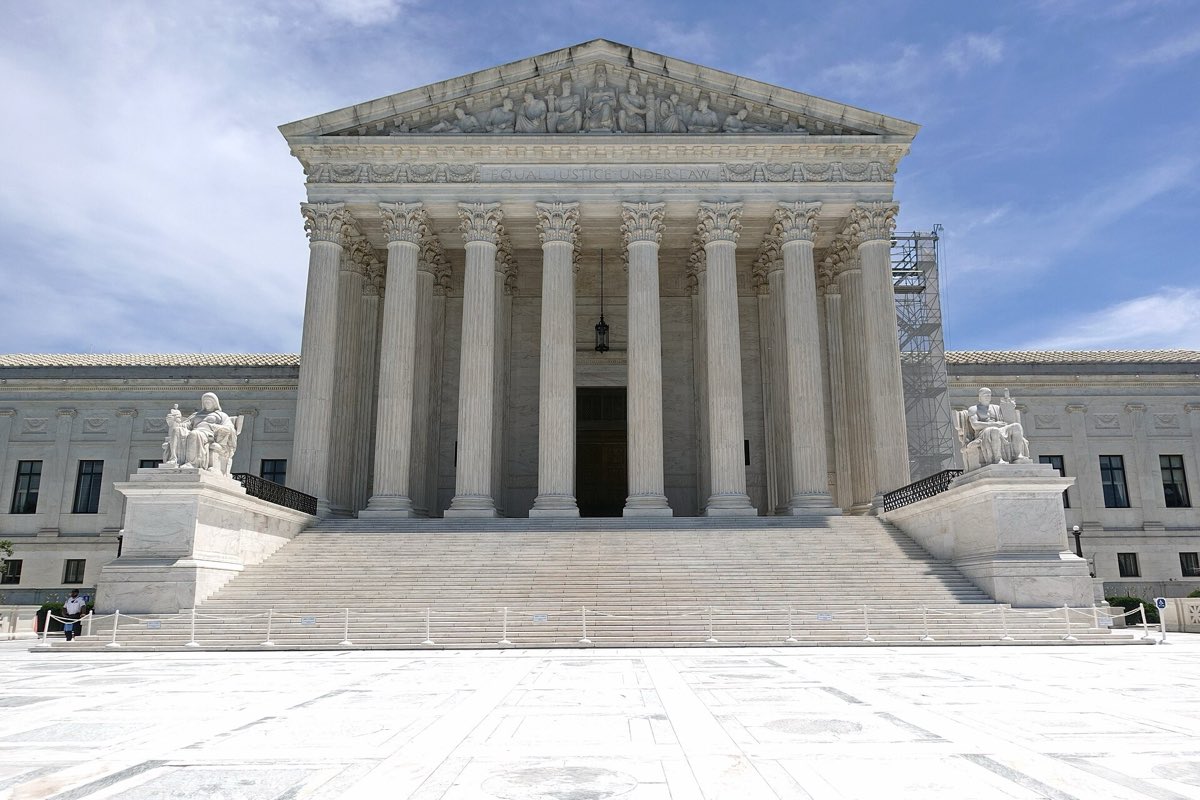
On Monday, the Supreme Court let the Trump administration resume work on the border wall and roads in Big Bend, Texas. The justices lifted a temporary halt imposed by federal judge Kathleen Cardone. The case over the waivers that cleared the way for the work is still open.
In an unsigned five-page order, the court said the government was very likely to prevail on whether Cardone had the power to hear the dispute. The justices said the delay had held up work the government saw as vital to border security. Justice Ketanji Brown Jackson was the sole dissenter. She would have turned down the Justice Department’s urgent request.
Cardone ruled in October that the head of the Department of Homeland Security had gone beyond the powers granted by law. She later refused to put her ruling on hold. The government then took its request to the Supreme Court.
Why the waivers are in dispute
The government used a 1996 immigration law to waive rules that would otherwise apply to the work. Those include rules that protect the environment and historic sites. Kristi Noem issued a waiver in February while she led the department. Her successor, Markwayne Mullin, issued two more in May and July.
An environmental group, a religious nonprofit and a riverboat guide brought the case. They say the law allows only limited waivers in places where unlawful crossings are widespread. They warned that the work could cause lasting harm to wildlife habitat and historic sites along nearly 200 miles of protected river. They also raised concerns about Big Bend National Park and Big Bend Ranch State Park.
The plaintiffs say Big Bend had the fewest apprehensions of the seven sectors on the southern border. Court filings put its share at 0.3% to 2.2% a year. The sector runs for more than 500 miles and makes up more than a quarter of the border with Mexico. Solicitor General D. John Sauer said people do cross there unlawfully and drugs have been seized. He argued that a gap in the wall would draw more crossings and drug traffic.
What work is planned
The government puts the work in the area at 341 miles. Its plans call for steel walls up to 30 feet high in some places, along with roads and vehicle barriers. Work on a 47-mile stretch of wall began in Hudspeth County in September, according to immigration agencies.
Images of bulldozers in the park in August drew objections from lawmakers in both parties, ranchers and local police. Rodney Scott of Customs and Border Protection said work in the park would pause through the end of September. He said the proposed tall wall would stay outside the national park. The agency still plans more than 200 miles of patrol roads and about 17 miles of vehicle barriers there.
Republicans in Congress set aside $46 billion for the wall nationwide. The broader plan calls for 2,000 miles of steel panels, vehicle barriers and surveillance equipment. Trump has pushed for the wall since his 2016 campaign.
Open reading during our launch. No account or payment required.
ARTICLE SOURCES
Sources and corrections
- ABC News (opens in a new tab)
- CBS News (opens in a new tab)
- NBC News (opens in a new tab)
- ABC News (opens in a new tab)
- PBS NewsHour (opens in a new tab)
- BBC News (opens in a new tab)